

Protecting Your Trees
Preserving Our Forests
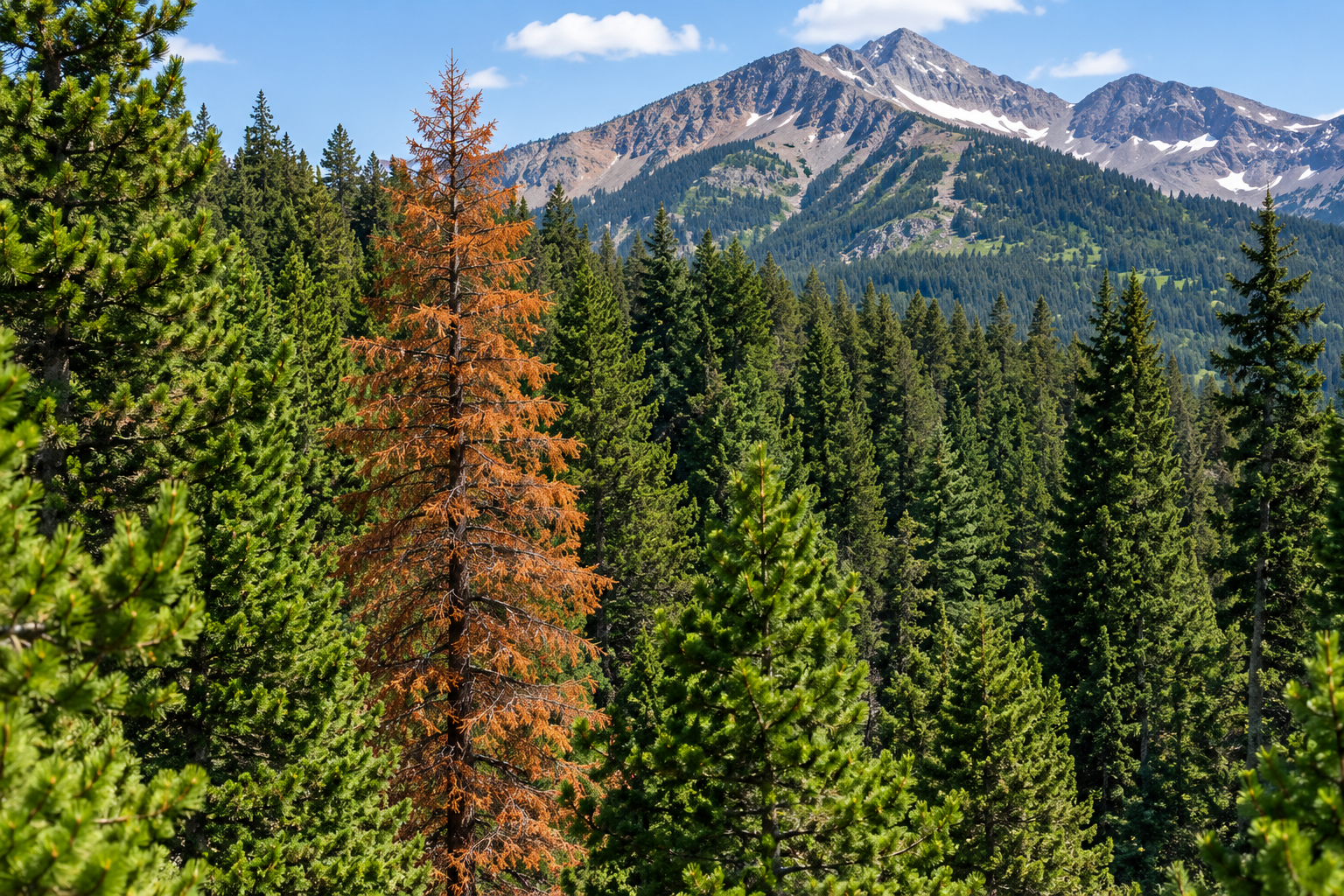
Regional drought conditions have created a thriving environment for bark beetles all along the Colorado front range. These destructive insects are rapidly destroying our trees. Beetle kill is currently a huge concern as weather conditions are predicted to continue like this for decades to come. At Beetle Defense Pros, our expertise comes from an ultra-focused approach: specializing in tree injection and pheromone application as a targeted solution for protecting Colorado’s trees from damaging beetle populations. Rather than trying to be everything to everyone, we concentrate our knowledge, training, and resources on one specialized method of tree protection. As beetle populations continue to threaten valuable trees across the region, Beetle Defense Pros is committed to providing a precise, preventative, and environmentally conscious approach to help property owners protect the trees they value most.
“An ounce of prevention is worth a pound of cure”
Our Mission
The beetle devastation to our trees is our primary focus. Protecting the environment while helping eradicate the problem is why our company was formed. As local residents and outdoor enthusiasts, we love the natural beauty of Colorado. Recent drought conditions with long-term forecasting predicting it only getting worse have caused us to take action. We started this company to help our neighbors protect their land, their trees, and their community. Through preventative steps and thoughtful care, we aim to make a difference in our communities, inform our clients, and not let the beetles devastate our beautiful state.
Bark Beetle Life Cycle
Attack (Summer)
Adult beetles emerge in mid-summer and fly to new host trees. They bore through the bark and release pheromones to attract more beetles for a mass attack.
Egg Laying
Female beetles create vertical galleries under the bark where they lay eggs. A blue stain fungus is introduced, which blocks the tree's water and nutrient transport.
Larvae (Winter)
Larvae feed on the inner bark throughout winter. Extended cold snaps below -30°F can kill larvae, but warmer winters allow higher survival rates.
Emergence (Summer)
New adult beetles emerge the following summer, completing the one-year lifecycle. Each female can produce up to 75 eggs, leading to exponential population growth.
Signs of Bark Beetle Infestation
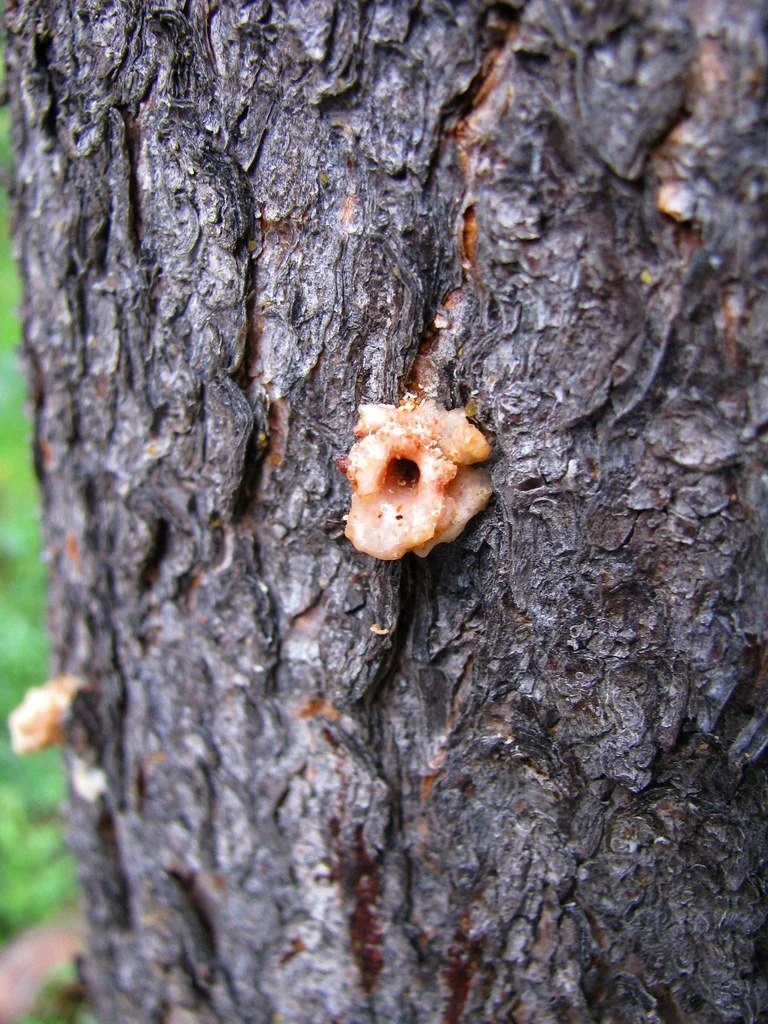
Pitch Tubes
Small masses of resin (pitch tubes) on the trunk are a tree's defense response to beetle boring. These popcorn-shaped globs of resin appear on the bark surface and indicate an active or recent attack.
Boring Frass
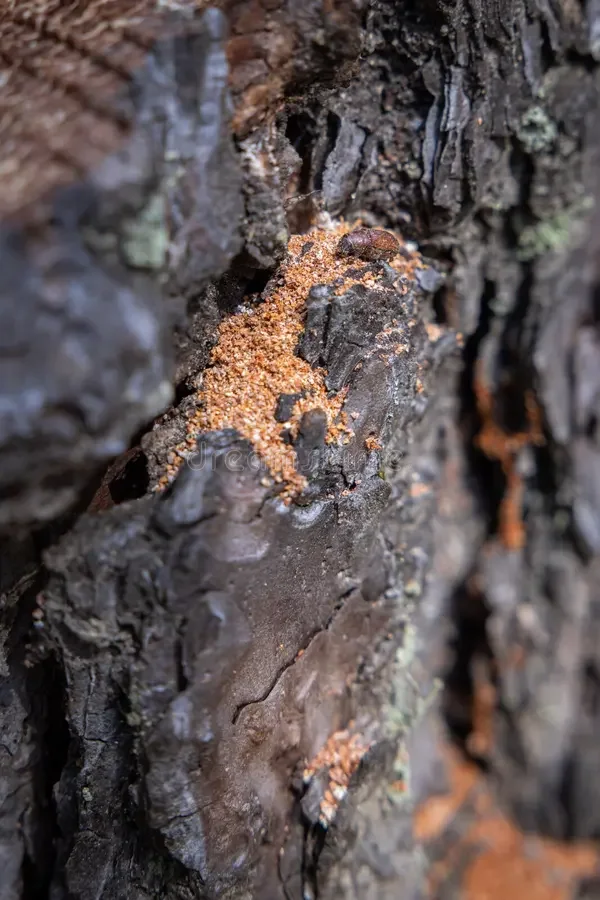
Fine, reddish-brown sawdust (frass) accumulates in bark crevices and at the base of the tree. This is created as beetles bore through the bark to reach the inner phloem layer
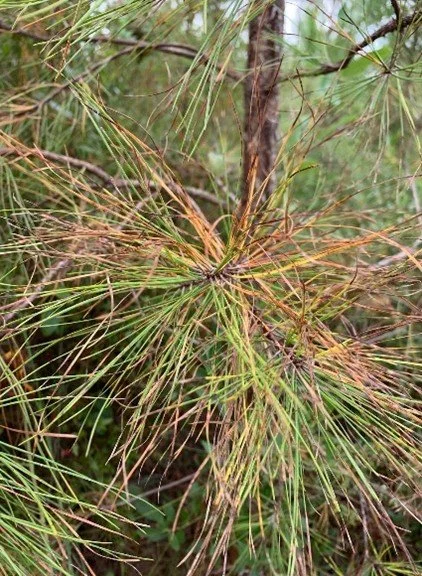
Needle Discoloration
Needles turn from green to yellow to reddish-brown, typically starting at the top of the crown. By the time needles turn red, the tree is already dead. This color change usually appears the summer after attack.
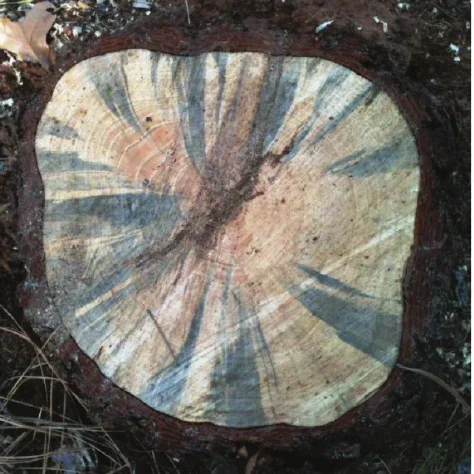
Blue Stain Fungus
Cutting into the sapwood reveals a blue-gray discoloration caused by the fungus beetles carry. This fungus clogs the tree's vascular system, preventing water and nutrient transport throughout the tree.
Consider Your Options
Invest in prevention instead of paying for the potential fallout
-
Avoid the cost of removing dead trees, replacing mature trees, and adding to the breading ground for bark beetles in your community.
-
Reduce the amount of wildfire fuel on your property, preserve your home’s surrounding landscape investment, maintain your privacy and views, and reduce wildfire-related homeowner’s insurance exposure.
-
Help reduce bark beetle number of beetles, slowing down overall beetle growth for your home and surrounding community.
-
Less fuel, hazards, and fire danger on your property helps provide a safer and less concerning community for our ;local firefighters.
True costs to consider when considering preventative care
-
The average cost for tree removal in the Colorado front range currently is $1,200 - $1,500 per tree.
-
Home insurance is a necessity and terms of your home loan. Providers are more scare and pricing is escalated directy with the relative fire danger of your home.
-
Losing trees also means losing aspects related to your property valuation. Lot appearance, views, privacy, and fire risk are all negatively effected by tree loss due to beetle kill.
-
Tree loss and bark beetle growth in your community increase fire risk, minimize overall tree health, and take away from the natural beauty of the Colorado front range.
It costs on average $90 - $100 per year to inject and protect one large Ponderosa Pine tree.
It costs on average $800 - $1,200 to fell, chip, and remove one large Ponderosa Pine tree.
Preventative Care
Environmental Focus
Protect Insurability
Communtity Mindset
Highly Effective Solution